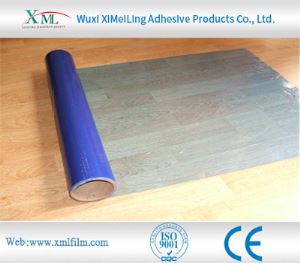
Do you know the distinction between high-viscosity protective film and low-viscosity protective film?
Mar 07, 2020
The performance of the protective film according to the viscosity is mainly: ultra-low viscosity protective film (micro-viscosity protective film), low-viscosity protective film, medium-viscosity protective film, high-viscosity protective film, ultra-high-viscosity protective film. Do you know the distinction criteria?
Many people are not very clear about the concept of the viscosity of the protective film. The unit of the viscosity of the protective film is g / 25mm, which refers to how much g is required to open a 25mm wide spline. The protective film can be divided into micro according to the strength of the viscosity. Viscous protective film, low-viscosity protective film, medium-viscosity protective film, high-viscosity protective film, ultra-high-viscosity protective film.
In fact, many times, some suppliers say that 40 grams is also low viscosity, he said that 3--5 grams is ultra-low viscosity. 40 grams is no longer low viscosity. Of course, this standard is relative. If his standard is 50 for low viscosity, that's fine. However, as a general rule, we think 10G or below is slightly sticky and has weak stickiness.
In fact, dividing by viscosity is a rough concept: 3-20g-slightly sticky, 30-low sticky, 40-medium sticky, 50, 60 is-medium sticky, 70-medium sticky, 80 or more --High viscosity.
Although there is no international standard for the classification of protective films according to their adhesion, for the die-cutting industry, the distinction of the adhesiveness of protective films is to choose a more suitable protective film for die-cutting products.
The basic principle for the selection of the viscosity of the protective film is that the viscosity is appropriate. Different surfaces require different viscosities.
https://www.xmlfilm.com/