

Your Professional Paint Protection Film Supplier
The company provides a full range of protection film industry chain services, the production of various types of acrylic protective film, glass special protective film, aluminum plastic doors and windows profiles protective film, Stretch film, stainless steel color plate protective film, security door protective film, carpet Floor protective film, building decoration materials protective film, aluminum, household appliances, such as protective film products by all users of praise.
Professional Team
Our professional team collaborate and communicate effectively with one another, and are committed to delivering high-quality results. They are capable of handling complex challenges and projects that require their specialized expertise and experience.
Support OEM / ODM
We offers comprehensive OEM and ODM solutions. Whether you are an OEM customer seeking high-quality products or an ODM customer requiring customized branding, we possess the complete capabilities to meet your unique requirements.
Rich Experience
The company was founded in 2001, and now we are a professional enterprise which has more than 15 years of experience in the field of adhesive products.
One Stop Solution
We can offer a range of services, from consultation and advice to product design and delivery. It is a convenience for the customers, as they can get all the help they need in one place.
-
![Paint Booth Protective Film]() Add to Inquiry
Add to Inquiry -
![Paint Protection Film Roll]() Add to Inquiry
Add to Inquiry -
![Headlight Protection Film]() Add to Inquiry
Add to Inquiry -
![Transparent PE Protective Film For Car Paint]()
Transparent PE Protective Film For Car Paint
Add to Inquiry -
![Customized Paint Protective Film For Car Sandblasting]()
Customized Paint Protective Film For Car Sandblasting
Add to Inquiry -
![Clear PPF Paint Protective Self Healing Film For Car Protection]()
-
![Paint Protection Film For Cars]()
Paint Protection Film For Cars
Add to Inquiry -
![Blow Molding Processing Type Automotive Film]()
Blow Molding Processing Type Automotive Film
Add to Inquiry -
![Customized Car Window And Paint Protective Film]()
Customized Car Window And Paint Protective Film
Add to Inquiry -
![One Side Adhesive Plastic Protective Film For Paint Surface]()
One Side Adhesive Plastic Protective Film For Paint Surface
Add to Inquiry -
![Paint Protective Film With No Residue]()
Paint Protective Film With No Residue
Add to Inquiry -
![Hood Protector Film]() Add to Inquiry
Add to Inquiry
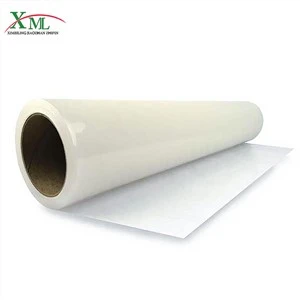
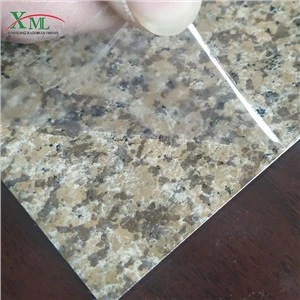

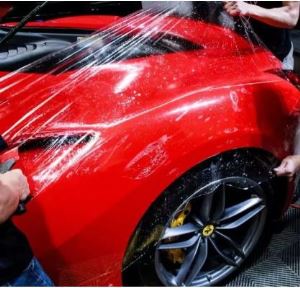


Parameter
|
Colors |
Transparent, Blue, Black, Green, White, Pink or customized |
|
Printability |
Can print Logo, company name in 1-3 colors on the film surface |
|
Thickness |
50micron~100micron (equals to 0.05mm~0.10mm) |
|
Length |
50m~2000m |
|
Width |
300mm~2050mm( various widths available) |
|
Elongation |
> 180% |
|
Packing |
One roll per carton or customized |
|
MQO |
5, 000sqm |
|
Delivery Lead Time |
7 days to 30 days |
Types of Paint Protection Film
Gloss PPF, the classic choice, seamlessly integrates with your car’s paint. It boasts exceptional clarity, essentially disappearing upon application. The result? A crystal-clear shield that amplifies the paint’s depth and shine, keeping your car looking showroom-fresh.
Pros:
● Preserves Original Look: Gloss PPF maintains the car’s inherent glossy finish, staying true to the manufacturer’s design.
● Unmatched Clarity: The film’s transparency ensures it blends flawlessly with the paintwork, creating an almost invisible barrier.
● Enhanced Depth and Shine: Gloss PPF acts like a magnifying glass for the paint’s natural shine, making it pop and creating a visually stunning finish.
● Cost-Effectiveness: Generally, gloss PPF is the most affordable option, making it a budget-friendly choice for many car owners.
Craving a distinctive look? Matte PPF offers a non-reflective finish, transforming your car’s paintwork into a sophisticated matte canvas. This contemporary aesthetic exudes a sense of mystery and intrigue, perfect for those who appreciate a more understated style.
Pros:
● Unique Matte Finish: Matte PPF offers a one-of-a-kind look that sets your car apart from the crowd. It adds a touch of personality and creates a truly unique aesthetic.
● Camouflages Imperfections: Minor swirls and scratches in the underlying paintwork tend to be less noticeable with matte PPF.
● Reduced Maintenance: Compared to gloss PPF, matte finishes require less frequent maintenance. The non-reflective nature downplays minor dust or water spots.
Self-healing PPF represents the cutting edge of paint protection technology. This innovative film incorporates a special topcoat formulated with elastomeric properties. These properties allow the film to self-heal minor scratches and swirl marks when exposed to heat, such as sunlight. Think of it as a built-in scratch repair system for your car’s paint!
Pros:
● Self-Healing Technology: Minor scratches and swirl marks on the film itself can disappear with heat exposure, keeping your car looking flawless for longer.
● Excellent Clarity: Like gloss PPF, self-healing PPF offers exceptional clarity, maintaining the car’s original appearance.
● Reduced Maintenance: Self-healing properties minimize the need for frequent touch-ups.
Seven Key Areas for Paint Protection Film on Your Car



Door Edges
If there is any surface that is going to take a beating, it’s the edge of your doors. Every time you park near a wall or another vehicle, you run the risk of a strong breeze catching your door and pulling it into a solid object. Protection film will keep the door edge looking great when accidents happen.
Door Cups
Ladies, do you your rings scratch the area behind the door handle? This location is one of the worst for scuffs and scratches. Proper application of protective film serves as an amazingly strong barrier against scratches from rings, car keys or long fingernails.
A-Pillars and Rear View Mirrors
Stones and debris are notorious for chipping your front bumper and the leading edge of your hood. But what about the A-pillars and the forward-facing side of your rearview mirrors? That painted area on either side of your windshield and your mirrors is as susceptible to damage.
Fenders
Parking lots and inattentive shoppers can wreak havoc on your car. But what about the technicians changing your oil or making repairs to your vehicle? Protecting your car’s fenders with paint protection film can help prevent scratches from shopping carts, people walking past your vehicle carrying groceries or damage from buckles and zippers on technicians’ clothing.
The Roof
One of the largest painted surfaces of your vehicle is the roof. Damage from tree sap and bird droppings can be costly to repair. Protecting your vehicle’s roof is another great way to keep your car, truck or SUV looking like new.
Door and Trunk Thresholds
Do you occasionally drag your feet while getting into your car or truck? What about while loading or unloading your trunk? Our protective films can easily cover these high-traffic areas and keep them in tip-top shape.
Hood and Trunk
When you are driving, gravel, sand and stones thrown up by other vehicles can damage the paint on the leading edge of your hood. When your car is sitting still, tree sap, bird droppings and even prolonged exposure to the sun can damage any of the horizontal surfaces of your vehicle.
Step 1: Choose Your Compound
Select the compound you'll use for the PPF application. You have three options: soap solution, installation gel, or sealant solution. Each serves as a lubricating agent to facilitate the application process.
Step 2: Prepare the PPF Film
Take the measurement of the parts of the vehicle that need to be covered with the paint protection film. Begin by cutting the PPF to the desired size using scissors or a cutter knife. Leave a slight margin around the edges to ensure complete coverage. Shake the chosen compound container thoroughly and coat your hands with it as well before application. This will prevent the powerful adhesives of the paint protection film from sticking to your fingers.
Step 3: Apply the Compound
Place the paint protection film on a clean table with the release liner side facing up. Remove the liner and treat the adhesive side of the PPF film with the compound. This compound facilitates adhesion, ensuring a secure bond between the film and the car's surface. Now, apply the chosen compound to the surface of your car as well where you intend to place the PPF. Ensure it is evenly spread, penetrating every area that will be covered by the film. This creates a seamless bonding surface.
Step 4: Install the PPF
Position the PPF film on the vehicle's surface according to your desired coverage area. Ensure precise alignment before proceeding further. Repositioning becomes challenging once the next steps are undertaken.
Step 5: Squeegee the Surface
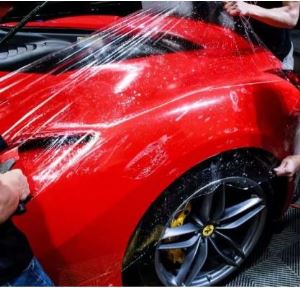
Use a squeegee to gently press the Paint Protection film onto the car's surface. Employ overlapping strokes to expel excess compounds and eliminate any trapped air bubbles or pockets. This process ensures a smooth and uniform application.
Step 6: Stretch the Film
If you're dealing with curved surfaces, this is the stage to stretch the PPF film for a snug fit. Some paint protection films possess natural elasticity that allows them to conform to curves without the need for heat. Applying an alcohol solution to the adhesive side facilitates bonding during stretching.
Step 7: Maintain a Wet Adhesive Surface
Throughout the application, ensure the adhesive side remains wet. This enhances repositioning flexibility and reduces the risk of visible lines that may appear if the adhesive dries unevenly.
Step 8: Final Touches
After completing the main application, carefully examine the results. Trim any excess film for a clean and polished finish. Remember that precise application is essential for ensuring long-lasting protection and an impeccable appearance.
Step 9: Gently Wipe the Surface
Wipe the surface with a dry microfiber cloth to smoothen it out and remove any excess liquid. Check your project for any sign of blistering. If there are any, use an air release pen to puncture them. Run the squeegee along the edges and corners for total adhesion.
Step 10: Let the PPF Cure
Let the paint protection film dry completely and cure for a maximum of 48 hours. Avoid touching the film or washing it for at least a week.
Manufacturing Process of Paint Protection Film (PPF)
Material Selection
At the heart of every PPF is a specialized thermoplastic urethane (TPU) film known for its exceptional durability, flexibility, and transparency. Manufacturers meticulously select raw materials with the desired properties to ensure the final product meets stringent quality standards.
Extrusion
The manufacturing process begins with the extrusion of the TPU polymer pellets into a thin, uniform film. Through a combination of heat and pressure, the pellets are melted and forced through a die, resulting in a continuous sheet of film. Precise control of temperature, pressure, and extrusion speed is critical to achieving the desired thickness and consistency.
Coating Application
Once the base film is extruded, it undergoes a series of coating processes to enhance its protective properties. Manufacturers apply specialized coatings to both sides of the film to improve scratch resistance, UV stability, and self-healing capabilities. These coatings are carefully formulated to provide optimal performance without compromising clarity or flexibility.
Customization and Cutting
After coating, the PPF undergoes custom-tailored cutting to fit specific vehicle models and configurations. Advanced computerized cutting systems precisely plot and cut the film according to digital templates, ensuring an exact fit for each panel and contour of the vehicle. This customization maximizes coverage while minimizing waste, optimizing efficiency in the production process.
Adhesive Application
To adhere the PPF to the vehicle’s surface, a high-performance pressure-sensitive adhesive is applied to one side of the film. This adhesive layer is engineered to provide strong bonding while allowing for easy repositioning during installation. Manufacturers carefully control the composition and application of the adhesive to ensure optimal adhesion and durability under various environmental conditions.
Quality Control
Throughout the manufacturing process, stringent quality control measures are implemented to ensure the PPF meets the highest standards of performance and reliability. Samples are regularly tested for thickness, clarity, adhesion strength, and resistance to abrasion and environmental factors.
Packaging and Distribution
Once the PPF passes quality control inspections, it is carefully packaged and prepared for distribution to customers worldwide. Manufacturers may offer a range of product variations, including standard clear films, matte finishes, and specialty formulations tailored to specific applications or preferences.
Shipping & Packaging

Our Service
We provide free technical service and samples.
1
>>
Free on-site touring and introduction of our factory.
2
>>
We can guarantee on-time delivery of samples and goods.
3
>>
Close follow-up of all orders by special person and keep customers informed timely.
4
>>
All after-sale request will be responded in 24 hours.
5
Our Factory
Wuxi Ximeiling Adhesive Products Co., Ltd. is located in the scenic coast of Taihu Lake, the birthplace of national industry and commerce, Jiangnan city of Wuxi. The staff of the team, advanced processing equipment, strict quality assurance system, improve the sales network, given the confidence of the future, but also to give customers a big confidence to ensure that let us join hands in creating a better tomorrow.

Advanced Production And Testing Equipment


Our Certifications

FAQ
As one of the most professional paint protection film manufacturers and suppliers in China, we're featured by quality products and competitive price. Please feel free to wholesale cheap paint protection film from our factory.
agricultural cotton wrap film, surface protection film for carpets, carpet protection in renovation